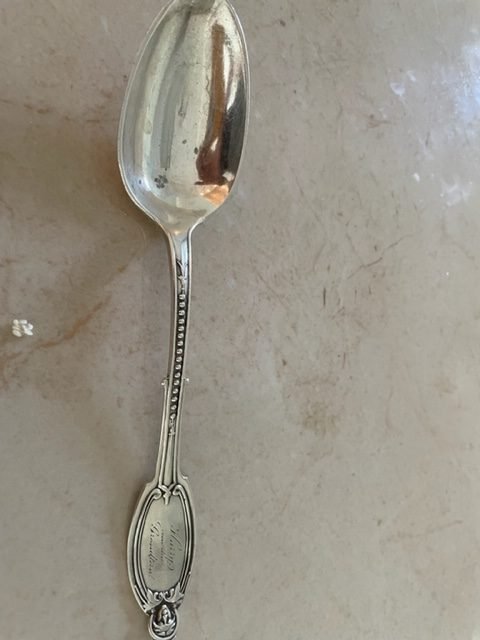
From a kitchen drawer, I pull out a silver spoon and squint to decipher the engraving in German of the name of my great-grandfather’s brother and 1865, his first birthday.
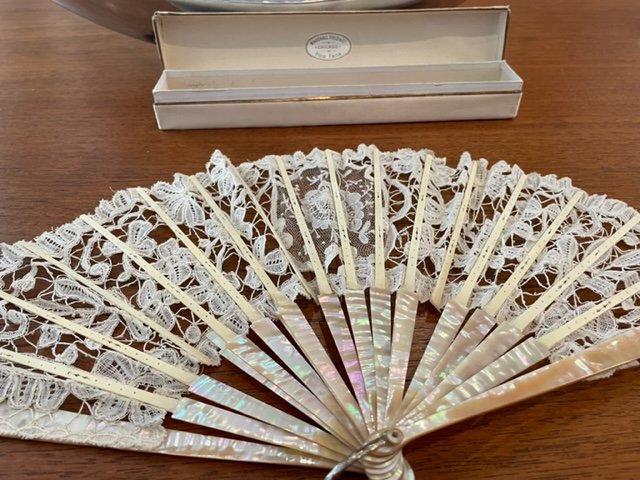
Stashed in a bedside drawer is a white satin box from Marshall Field and Company’s Fine Fans. I widen my great-grandmother’s fan of white lace trussed by pearl ribs.
In a dresser drawer under socks, a tiny box holds a gold ring with hair woven between the bands. A penciled note says the strands came from my great-grandfather’s mother.
I’m using these mementos to create scenes for the nonfiction narrative I’m writing about my great-grandfather Victor Falkenau and his role as a building contractor in the development of Chicago. I can’t make up one word—though I can craft vivid scenes from the details I know. How much nonfiction can I draw from these relics, and which do I leave in a drawer?
In seven years of researching and writing this book, I’ve made many mistakes. Fortunately, historical narrative classes gave me tools to select trustworthy sources and create an honest story.
Read the rest of the essay to learn from my actual and near mistakes.
Telling It Like It Was: Selecting the Right Facts for Nonfiction Narrative